Jump to HeaderJump to Main ContentJump to Footer
Michigan State University
MSU-Hurley Children’s Hospital Pediatric Public Health Initiative

MSU-Hurley Children’s Hospital Pediatric Public Health Initiative

  • Home
  • |
  • About
    • Team Directory
    • About Dr. Mona
    • Mission, Vision, Values
    • HIstory
    • Ways to Give
    • Teams
  • |
  • Rx Kids
  • |
  • Nutrition
  • |
  • Flint Registry
  • |
  • Flint Tooth Fairy
  • |
  • Scholars
  • |
  • Employment
  • |
  • Contact
    • Directory
MSU-Hurley Children’s Hospital Pediatric Public Health Initiative
  • Home
  • About
  • Rx Kids
  • Nutrition
  • Flint Registry
  • Flint Tooth Fairy
  • Scholars
  • Employment
  • Contact

< Home

< About

  • Team Directory
  • About Dr. Mona
  • Mission, Vision, Values
  • HIstory
  • Ways to Give
  • Teams

< Rx Kids

< Nutrition

< Flint Registry

< Flint Tooth Fairy

< Scholars

< Employment

< Contact

  • Directory
MSU-Hurley Children’s Hospital Pediatric Public Health Initiative > About >

Teams

Teams

PPHI Staff

Child Health and Development Team

The MSU-Hurley Children's Hospital Pediatric Public Health Initiative's Child Health and Development team works with many partners to advocate for, implement, and assess child development promoting interventions. Leaning on the science of toxic stress, resilience and brain plasticity, our work is weighted in the critical period of early childhood.

As a community, Flint has made massive investments and expansions in home visiting programs, parenting support, trauma-informed care, behavioral health services, medical home access, Medicaid expansion, quality child care and preschool opportunities, school health services, mindfulness and so much more!

Here are a few of the highlighted PPHI programs:

Video Interaction Project (VIP)

  • The program is designed around the pediatric health care visit to enhance language and literacy in at-risk children through the promotion of positive parenting. The goal of the program is to build parenting skills and promote self-efficacy.
  • The medical director of VIP is Dr. Lauren O'Connell. Dr. O'Connell is a fellowship-trained Development and Behavior Pediatrician (DBP) with an expertise in positive parenting.

Early Literacy

Under the banner of 'Flint Kids Read,' the entire Flint community is working to expand early literacy efforts in Flint, with the goal of providing 100 percent of children in Flint with access to age-appropriate books at home and optimal kindergarten readiness

  • Reach Out and Read: In 2016, Hurley Children’s Clinic was the only pediatric office to offer Reach Out and Read (ROR) in Genesee County. Reach Out and Read (ROR) is a national evidence-based program that has been shown to increase reading at home, improve vocabulary, and provide critical brain stimulation. The medical provider gives each child age birth to 5 years an age-appropriate book at every good visit and encourages families to read aloud with their children every day. Learn more visit: http://www.reachoutandread.org/resource-center/find-a-program/
  • Born to Read: Parents of newborns at Hurley Medical Center are receiving a literacy bundle as part of the program, Born to Read.
  • Imagination Library: Dr. Hanna was awarded the Aspen Ideas Spotlight Health Award for Flint Kids Read, which launched the Dolly Parton’s Imagination Library program in Flint. Every child from birth to age five, living in Flint, can enroll to receive an age-appropriate book delivered to their home through the mail every month. Learn more visit: https://fpl.info/imagination/

Flint Kids Are

  • 'Flint Kids Are' campaign is a community-wide communications initiative to help inspire hope and promote the potential for Flint area kids. The 'Flint Kids Are' gives kids a way to tell their own story, using their own words.
  • Learn more: https://flintcares.com/flintkidsare/

These teams work closely with the PPHI Parent Partner Group and the PPHI Flint Kids Advisory Group.
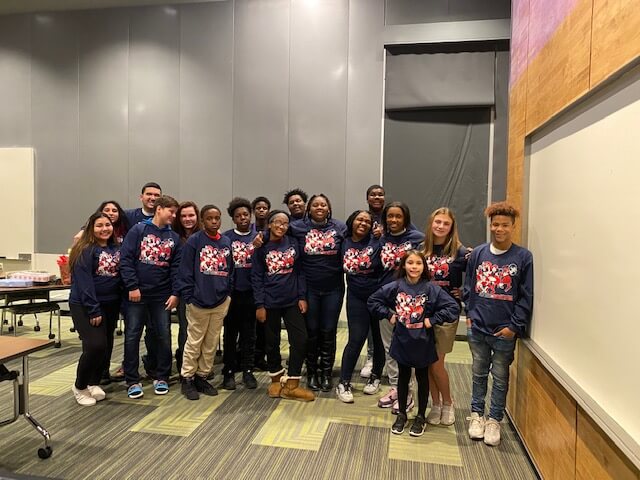
Students lined up 

PPHI Flint Kids Advisory Group, "Flint Youth Justice League."

Michigan State University

Additional Resources

  • Charles Stewart Mott Department of Public Health
  • MSU College of Human Medicine
  • Hurley Children's Hospital

COLLEGE OF HUMAN MEDICINE

  • About the College
  • Medical Education
  • News
  • Research

Contact us

(810) 600-5653

Address

MSU-Hurley Children’s Hospital Pediatric Public Health Initiative 200 East 1st Street Flint, MI 48502

Follow Us

  • Visit our Instagram page
  • Visit our Facebook page
  • Visit our LinkedIn page
  • Visit our page on X

If you're having accessibility issues, please let us know.

Michigan State University
  • Contact Information|
  • Site Map|
  • Privacy Statement|
  • Site Accessibility|
  • Call MSU: (517) 355-1855|
  • Visit: msu.edu|
  • Notice of Nondiscrimination|

SPARTANS WILL|© Michigan State University|

Child Health Policy and Advocacy

The MSU-Hurley Children's Hospital Pediatric Public Health Initiative's Child Health Policy and Advocacy team advocates for resources and policies to mitigate the impact of the crisis and to optimize children’s health, both in Michigan and nationally.

Some of the team's current activity includes:

  • State and federal advocacy (multiple congressional testimonies, Hill visits and expert consultation)
  • AAP Blueprint for Health advocacy
  • Michigan Child Lead Elimination Board
  • National Lead Elimination Summit Steering Committee
  • RWJF and Pew Health Impact Lead Elimination Efforts
  • 2019 Michigan AAP Blueprint for Children
Exposure Assessment History

Uncovering the crisis

FLINT, Mich. - At a press conference on September 24, 2015, the Pediatric Public Health Initiative (PPHI) team released early findings showing an association between the water source switch and increased blood lead levels above 5ug/dl in young children.

The PPHI team then published the expanded research online in the American Journal of Public Health in January 2016. This article was available in print shortly after.

The Centers for Disease Control validated the research by analyzing the available blood lead levels for all Flint children and reporting similar findings. A report in Morbidity and Mortality Weekly Report was released on July 1, 2016.

The above research is an UNDERESTIMATION of lead exposure after the water switch. Before the water crisis, less than 50% of children ages 1 and two were tested for blood lead levels. Infants, the most neurodevelopmental vulnerable group, were rarely tested, and non breastfed infants consume the most amount of water proportionally, as the formula was generally reconstituted using tap water.

Elevations in adult blood lead levels and animal blood lead levels were also reported during the Flint water crisis.

Our efforts now

IRISE

The PPHI is leading an ambitious research study called Impact of Resilience, Interventions, Stress, and Environmental Exposure (IRISE) in Flint.  Robert Wood Johnson Foundation funds this study and led by Dr. Mona Hanna. The purpose of the IRISE research study is to understand how lead exposure impacts children and identify sources of resilience. This knowledge may help community members in Flint provide children with the best interventions and may be generalizable to a large number of children in the United States who face similar experiences.

Mothers and their biological child currently age 4½ to 6 years old who lived in the City of Flint between April 2014 and October 2015 can participate in the IRISE study.  The children complete an in-depth developmental assessment, and mothers complete questionnaires and an interview about their child's development and behaviors, and about their well-being.

Research from the Flint water crisis

  • Elevated Blood Lead Levels in Children Associated With the Flint Drinking Water Crisis: A Spatial Analysis of Risk and Public Health Response
  • Blood Lead Levels Among Children Aged <6 Years — Flint, Michigan, 2013–2016
  • Virginia Tech Flint Water Study
  • Social and Built Environmental Correlates of Predicted Blood Lead Levels in the Flint Water Crisis
  • The Flint Water Crisis: A Coordinated Public Health Emergency Response and Recovery Initiative
  • Four Phases of the Flint Water Crisis: Evidence from Blood Lead Levels in Children
Health Informatics

The MSU-Hurley Children's Hospital Pediatric Public Health Initiative's Health Informatics team works with many partners to consolidate data from multiple sources for outcomes research, program evaluation research, and real-time user/agency/provider access for program enrollment/utilization.

Two PPHI-led health informatics projects include the State of Flint Kids Report Card and the Flint Registry